Why Planet-Eater Moro Is the Ultimate Successor to Perfect Cell
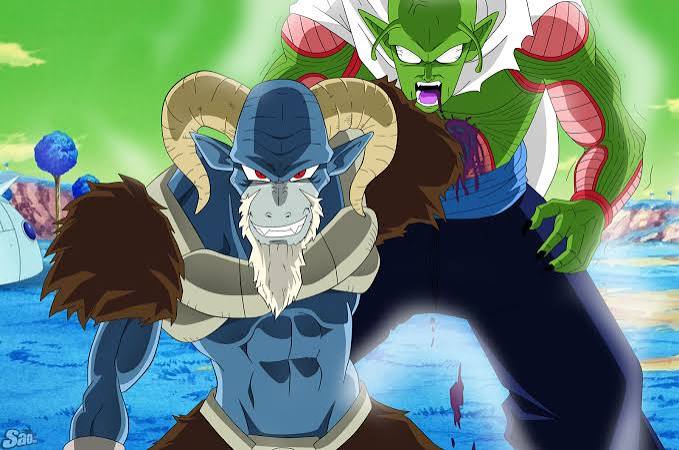
For over three decades, Akira Toriyama’s foundational battle shonen has lived and died by the caliber of its antagonists. While the franchise frequently pioneers narrative benchmarks, it created an almost insurmountable peak during the Android conflicts: Perfect Cell. He wasn’t just a terrifying physical threat; he was an intellectual, arrogant showman who possessed an infectious charisma. For decades, fans wondered if any future antagonist could ever replicate that specific blend of existential terror and compelling personality.
The subsequent chapters of the manga answer this question definitively. Dragon Ball Super introduces Planet-Eater Moro, the ancient dark wizard who breaks out of the Galactic Patrol Prison. Moro isn’t just another powerhouse designed to push Goku and Vegeta to a new color-coded transformation. He represents a deliberate structural and thematic return to the golden standard set by Cell, updated for the cosmic stakes of modern anime narratives.
Key Takeaway Summary
The Moro Paradigm: Planet-Eater Moro bridges the gap between classic Dragon Ball Z tension and modern cosmic stakes. By combining the absolute, unapologetic malice of a mythical demon with an escalating energy-absorption mechanic that mirrors Cell’s evolutionary terror, Moro stands out as an irredeemable force of nature. His ability to push Ultra Instinct to its absolute limit establishes him as the most complete antagonist since the Cell Games.
The Genetic Code of a Masterpiece: Why Perfect Cell Set the Ultimate Benchmark
To understand why Moro works so brilliantly, we have to look closely at the blueprint Cell left behind. Before Cell arrived, shonen threats were largely linear. Frieza was a cosmic tyrant driven by political domination and a fear of the Super Saiyan legend. He was cruel, but his motives were rooted in the control of an empire.
Cell altered the narrative landscape completely by making the stakes intensely personal and psychological.
[Imperfect Cell: Stealth & Survival] ──> [Semi-Perfect Cell: Obsession] ──> [Perfect Cell: The Ultimate Showman]
Cell’s brilliance lay in his unique character composition:
- The Showman’s Pride: Cell didn’t want to just conquer the Earth; he wanted to hold a televised tournament to display his superiority. His arrogance was theatrical, entertaining, and deeply psychological.
- Biological Escalation: His power wasn’t static. He evolved by literal consumption, turning the heroes’ allies into fuel for his own ascension.
- The Psychological Mirror: Because he possessed the DNA of Goku, Vegeta, Piccolo, and Frieza, he knew exactly how to exploit their specific character flaws—Vegeta’s pride, Goku’s desire for a fair fight, and Gohan’s latent pacifism.
For years, later villains struggled under this shadow. Majin Buu was an chaotic force of nature, lacking the sharp, biting dialogue that made Cell so captivating. When the narrative transitioned into modern sagas, the threats either shifted to literal deities like Beerus or resurrected nostalgic elements like Golden Frieza. The series lacked a fresh, structurally sound antagonist who could capture that specific lightning in a bottle—until the ancient wizard escaped his cell.
Deconstructing Planet-Eater Moro: The Ancient Myth Made Flesh
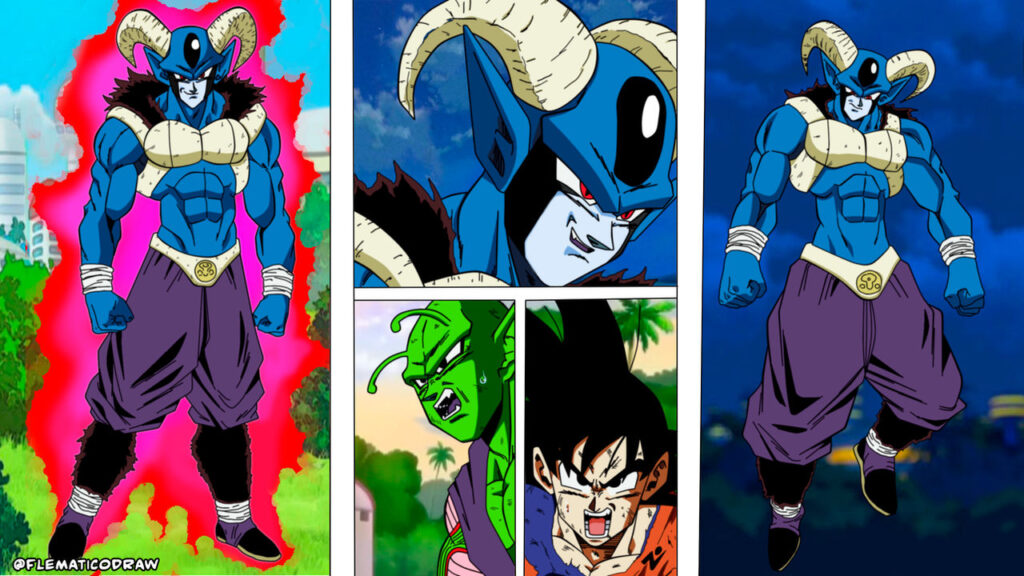
When Toyotaro took the creative lead for the Galactic Patrol Prisoner Saga, he sought a visual and thematic departure from the sleek, high-tech, or divine designs that dominated recent story arcs. Moro’s design is a deliberate homage to traditional Western folklore demons.
  Traditional Shonen Villain             Toyotaro's Vision for Moro
┌────────────────────────────┐         ┌────────────────────────────┐
│ • Relatable Motivation     │         │ • Mythological Goat Design │
│ • Potential for Redemption │   VS    │ • Absolute Cosmological Evil│
│ • Sleek, Modern Aesthetics │         │ • Primal, Demonic Imagery  │
└────────────────────────────┘         └────────────────────────────┘
By modeling Moro with striking goatlike features, the design communicates an immediate message to the reader: this entity cannot be redeemed. Unlike Piccolo or Vegeta, who possessed complex internal lives that allowed them to transition into protective allies, Moro is an ancient blight. He is an explicit throwback to an era when evil was absolute, primordial, and terrifying.
Moro’s backstory stretches back eons before the original story began, to a time when Universe 7 was chaotic and untamed. Alongside forces like the volatile Majin Buu and the God of Destruction Beerus, Moro ruled through absolute fear.
His threat was so massive that the Grand Supreme Kai had to sacrifice the majority of his own divine energy just to seal the wizard’s magic away. When he breaks free millions of years later, he isn’t seeking a simple rematch; he is reclaiming his rightful place at the top of the food chain.
The Mechanics of Cosmic Consumption: How Moro Evolves
Much like Cell used his tail to drain the life force of citizens to achieve his perfect state, Moro utilizes magic to siphon energy on a planetary scale. This isn’t just a simple combat technique; it’s an ecological disaster.
The Evolutionary Stages of Moro
| Form / Phase | Visual Aesthetic | Primary Tactical Capability | Narrative Impact |
| Old Wizard Moro | Decrepit, long-bearded goat humanoid, frail posture. | Primary reliance on pure magic, environmental manipulation, and stealth siphoning. | Outsmarts Saiyans via strategic attrition; strips New Namek of its life force entirely. |
| Youthful Moro | Muscular, rejuvenated physical build, shortened beard. | Masterful blending of martial arts proficiency with immediate, mid-combat energy absorption. | Dominates post-training Goku and Vegeta; easily resists standard Super Saiyan Blue forms. |
| Moro-Seven-Three | Sleek, bio-mechanical hybrid appearance after consuming his subordinate. | Retains stolen magical properties while gaining perfect copy abilities (Big Bang Attack, etc.). | Negates the technical advantages of Vegeta’s Forced Spirit Fission; creates despair. |
| Angel-Infused Moro | Unstable, radiating divine aura, features mimicking Angelic traits. | Access to Autonomous Ultra Instinct, near-infinite spatial awareness. | Pushes the absolute ceiling of mortal power, forcing Goku into Mastered Ultra Instinct. |
| Planet-Merged Moro | Colossal, grotesque organic integration with the Earth’s crust. | Complete structural symbiosis with the planet; self-detonation threat capable of wiping out a galaxy. | Turns the battlefield into a hostage situation, requiring collective energy from all Z-Fighters. |
The Core Engine: Why Planetary Siphoning Changes the Stakes
In standard shonen matches, power output is a matter of ki management. You train harder, unlock a deeper reservoir, and fire a larger beam. Moro completely alters this logic.
When fighting Moro, the very ground beneath your feet becomes a liability. His magic allows him to pull the life energy out of the grass, the oceans, the core of the planet, and the fighters themselves.
Every second the fight drags on, the hero grows weaker while Moro grows exponentially stronger. It is a brilliant narrative device that strips away the safety net of high-tier transformations, forcing the heroes to think tactically rather than relying entirely on raw physical power.
The Angelic Ascendancy: Breaking the Ceiling with Ultra Instinct
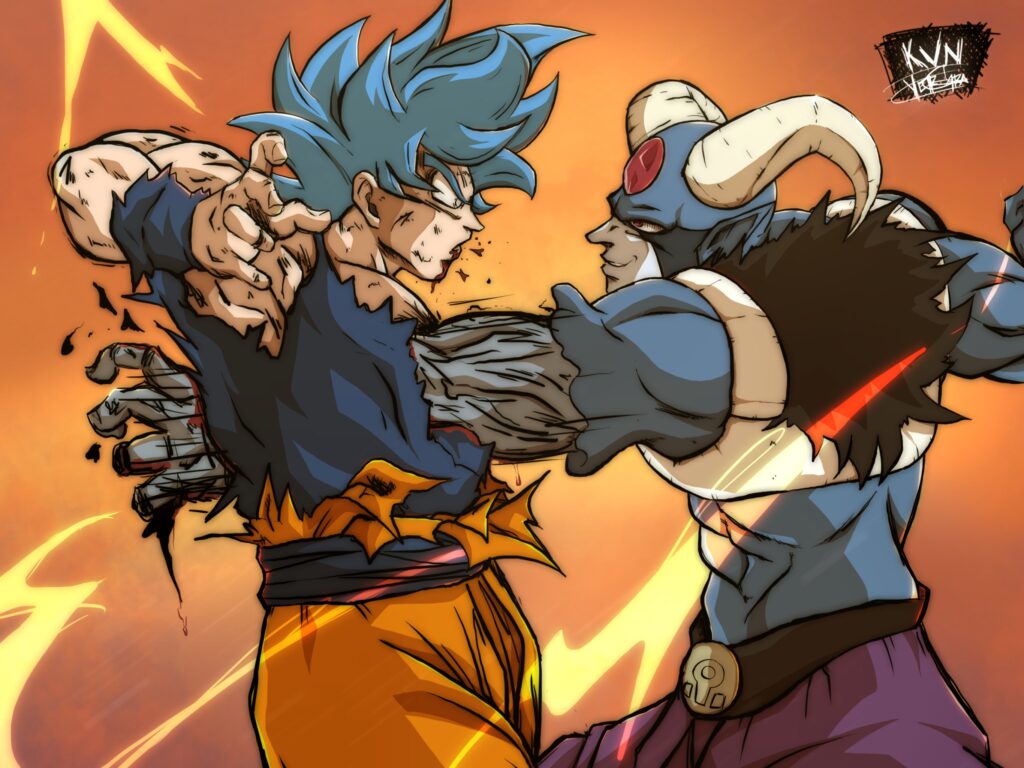
The true turning point of the Galactic Patrol Prisoner arc occurs when Moro manages to absorb the copied abilities of Merus, an Angel-in-training who sacrificed himself to seal the wizard’s copying abilities. By bypassing this seal through calculated consumption, Moro achieves a feat never before accomplished by a villain: he accesses the realm of the Angels.
[Moro's Base Magic] + [Merus's Copied Essence] ──> Unstable Angelic Ultra Instinct Moro
This transforms the narrative dynamic completely. Ultra Instinct had previously been framed as the ultimate, untouchable state of absolute defense—a technique reserved for the divine. By granting Moro this specific state, the story creates a dark reflection of Goku’s personal journey.
Moro doesn’t achieve Ultra Instinct through rigorous spiritual discipline or inner peace; he takes it by force. The resulting battle between Mastered Ultra Instinct Goku and Angel-Infused Moro isn’t just a clash of high power levels. It is a philosophical conflict pitting earned, disciplined mastery against stolen, unbridled consumption.
Structural Breakdown: The Mechanical Failure of Stolen Divinity
When Moro absorbs the Angelic power, his mortal frame begins to fracture under the sheer weight of divine energy. This sets up an incredible troubleshooting sequence mid-battle. A mortal body simply isn’t designed to contain the infinite operational capacity of an Angel.
The Physical Limiters of Mortal Vessels
To survive the internal pressure of the stolen power, Moro is forced to undergo an emergency adaptation. He merges his entire physical being with the Earth itself. This creates a terrifying tactical dilemma for the Z-Fighters:
- The Hostage Planet: If Goku strikes Moro with enough force to destroy him, he will simultaneously shatter the Earth, killing billions of innocent lives.
- The Energy Bomb: Moro’s body becomes a swelling, volatile reactor. If his mind snaps completely under the strain, the resulting detonation will wipe out the entire galaxy.
- The Solution: The situation requires an intricate, multi-layered strategy. Vegeta must use his newly acquired Forced Spirit Fission to actively separate Moro from the planet’s lifeforce, while the remaining Z-Fighters gather their collective energy to fuel Goku’s final, giant ki-avatar strike.
This structural escalation directly echoes the desperate final moments of the Cell Games. When Perfect Cell was backed into a corner by Super Saiyan 2 Gohan, his flawless composure cracked, causing him to swell into a grotesque, volatile bomb capable of destroying the solar system. Moro’s transformation into a living planet modernizes this exact narrative beat, scaling the stakes up to match the galactic framework of the current series.
Personality and Philosophy: The Arrogant Mirror to Perfect Cell
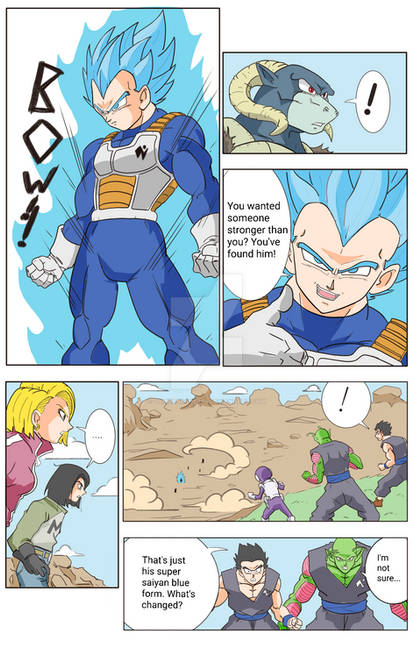
While the physical threats and energy mechanics are spectacular, the primary reason Moro stands as Cell’s true equal is his distinct personality. Both characters operate on an absolute conviction of their own natural superiority, but they express it through different styles.
                  ┌────────────────────────────────────────┐
                  │        THE ARROGANCE SPECTRUM          │
                  └────────────────────────────────────────┘
                                       │
            ┌──────────────────────────┴──────────────────────────┐
            ▼                                                     ▼
     PERFECT CELL                                            PLANET-EATER MORO
  • Flamboyant Showman                                    • Pragmatic Tyrant
  • Seeks validation through combat                       • Seeks absolute consumption
  • Views fighters as entertainment                       • Views life forms as sustenance
  • "Prove my perfection to the world"                    • "The universe belongs to my hunger"
Cell’s arrogance was flamboyant and deeply rooted in vanity. He wanted an audience to marvel at his perfection. Moro’s pride, by contrast, is ancient, cold, and entirely pragmatic. He doesn’t need an audience to applaud him; he looks at the universe the way an apex predator looks at a forest. To Moro, planets and populations aren’t societies or cultures—they are simply meals that have been left to ripen over millions of years.
When confronted by the heroes, Moro’s dialogue drips with a chilling, calm dismissiveness:
“Such power… it’s almost a shame I can’t steal it.”
This line captures his entire philosophy perfectly. He doesn’t hate Goku or Vegeta; he simply views them as highly concentrated packages of energy. Their struggles, their training, and their transformations are nothing more than a temporary nuisance delaying his dinner. This complete lack of empathy or moral conflict makes his presence deeply unsettling, restoring a genuine sense of danger that the franchise hadn’t seen in years.
FAQ: Deep Nuances of the Moro Arc
How does Moro’s energy absorption differ from Android 19 and 20?
Unlike the mechanical absorption used by Androids 19 and 20, which required direct physical contact via palms to drain individual targets, Moro uses planetary magic. He can draw ambient energy from an entire ecosystem simultaneously without ever touching his victims. Furthermore, while the Androids merely stored energy to power their internal batteries, Moro uses it to permanently increase his baseline power and actively reverse his physical aging.
Why couldn’t the Galactic Patrol execute Moro during his eons of imprisonment?
Moro’s physical durability and latent magical defenses were so powerful that no conventional weapon or execution method available to the Galactic Patrol could pierce his skin. Additionally, because his magic was tied to his life force, any attempt to violently terminate him risked releasing a catastrophic backlash of stored planetary energy. The authorities were forced to keep him contained within a maximum-security cell, relying on the gradual decay of his magic over millions of years to keep him neutralized.
What makes Forced Spirit Fission the perfect counter to Moro?
Developed on the planet Yardrat, Forced Spirit Fission allows the user to detach and liberate energy that has been unnaturally combined, absorbed, or fused. Because Moro’s entire power base relies on the stolen lifeforce of thousands of planets and individuals, every strike from Vegeta’s Spirit Fission actively strips that stolen energy away from Moro’s body. This returns the life force back to its rightful origins and systematically reduces the wizard back to his frail, vulnerable state.
Is Moro truly irredeemable compared to past villains like Frieza?
Yes, Moro is written as an absolute, foundational evil. While Frieza operates on political tyranny, galactic commerce, and personal revenge—allowing him to occasionally cooperate with the heroes for mutual survival—Moro is driven entirely by a cosmic hunger. His very existence requires the systematic eradication of planets. There is no middle ground, no empire to negotiate with, and no shared interest that could ever make him an ally. He is a pure force of consumption.
The Forward Horizon of Shonen Antagonists
Planet-Eater Moro successfully revitalizes the core elements that made the classic Android era so memorable. By grounding the massive cosmic stakes in a tangible, terrifying evolutionary threat, the narrative crafts a villain who feels both entirely fresh and reassuringly nostalgic.
Moro reminds us that the best shonen conflicts aren’t resolved by simply hitting the opponent harder. They require smart planning, tactical counters, and a willingness to confront absolute, unyielding malice. As the series continues to explore the furthest reaches of mortal and divine power, Moro stands as a brilliant reminder of how to write an antagonist who is genuinely rotten to the core—and completely unforgettable because of it.