Today’s Wordle Hint: Strategy, Best Starting Words, and Analysis (April 2026)
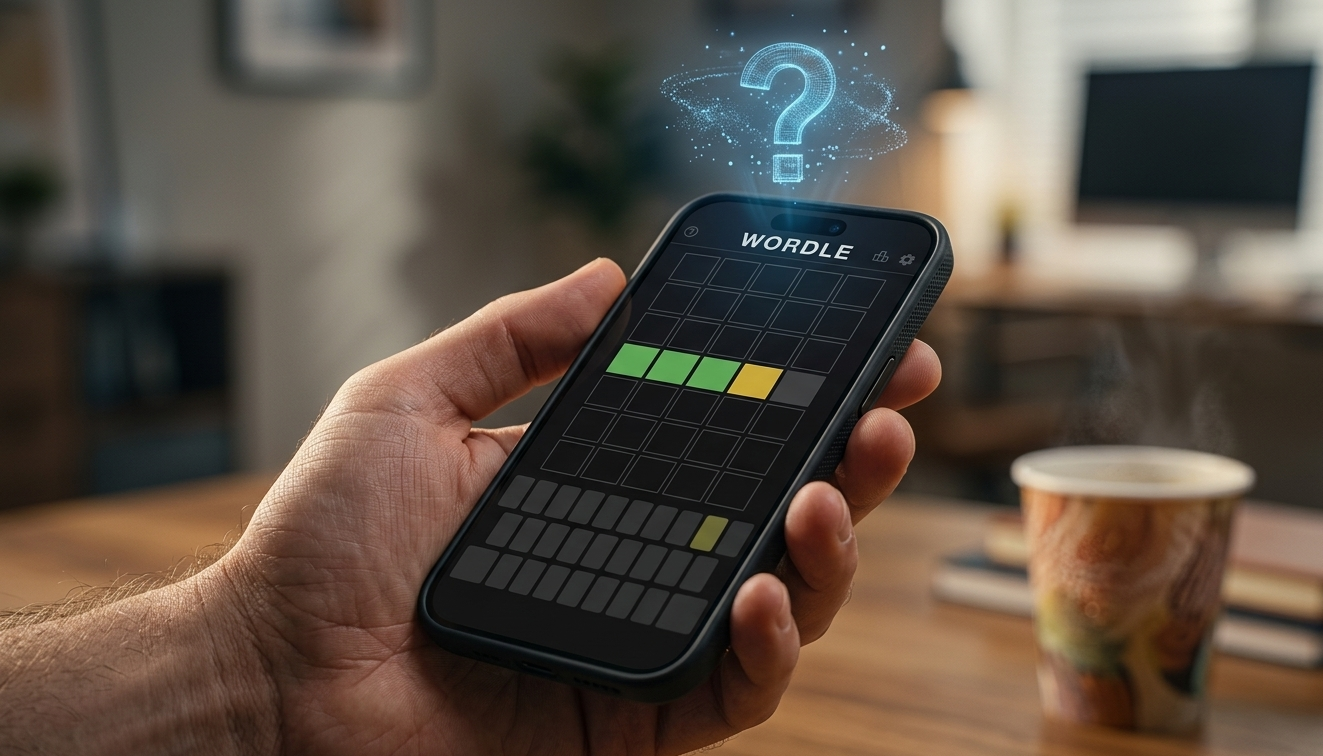
In the grand timeline of internet fads, most games burn bright and vanish within months. We saw it with Flappy Bird, and we saw it with HQ Trivia. Yet, as we move through April 2026, Wordle remains a morning ritual for millions. It is the digital equivalent of the “New York Times Crossword,” but for the TikTok and Threads generation.
But as the game has aged, the “meta” (the most effective tactics available) has evolved. It’s no longer just about guessing a five-letter word; it’s about data analysis, linguistic probability, and the strategic use of Wordle hints.
1. The Linguistic Architecture: Why Five Letters?
The magic of Wordle lies in its constraints. Why five letters? Linguistically, five-letter words are the “sweet spot” of the English language. They are long enough to allow for complex vowel-consonant combinations (like PHLEM or SQUEE) but short enough that the human brain can visualize the permutations without a notepad.
In 2026, the official Wordle dictionary has seen subtle shifts. While the core list remains based on common English, the NYT editors have leaned into words that are slightly more “literary” or “textured.” This is why a simple “hint” is often the only thing standing between a player and a broken 500-day streak.
2. The Psychology of the “Hint”
There is a fascinating psychological shift happening. In 2022, using a hint was seen as “cheating.” In 2026, it is seen as Resource Management.
When you look for a Wordle hint, you aren’t looking for the answer; you are looking for a “pivotal nudge.” Psychologists call this the “Aha!” moment. If someone tells you today’s word has a “double consonant,” your brain immediately begins a high-speed scan of its internal lexicon. You are still doing the work; the hint is simply the catalyst.
3. Advanced Tactical Openers (The 2026 Meta)
For years, ADIEU was the king of openers because it cleared out four vowels. However, the “Pros” have moved on. In current high-level play, clearing consonants is considered more valuable than clearing vowels.
The Top 3 Openers for April 2026:
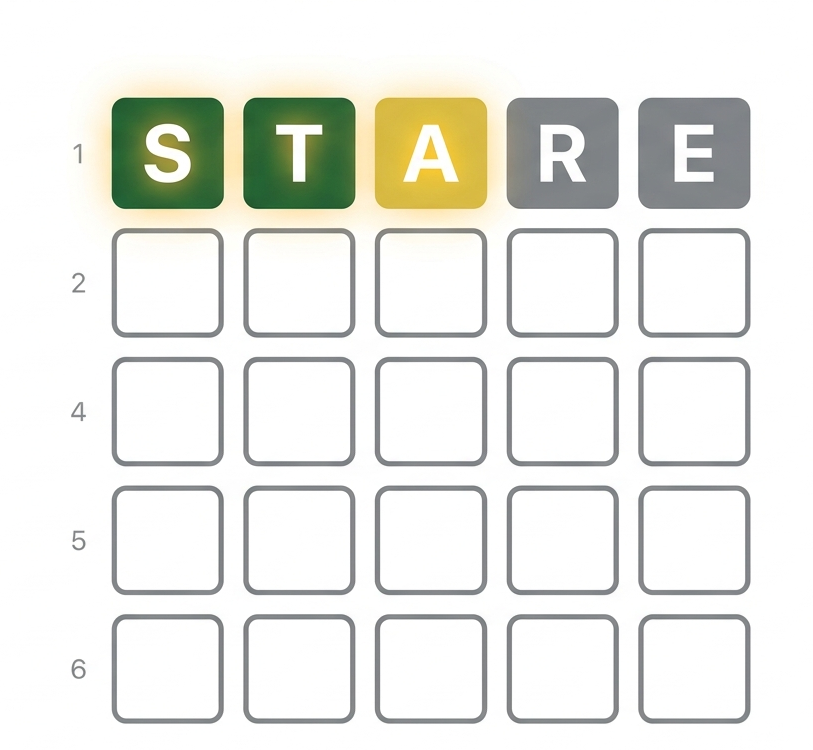
- STARE: Still the statistical heavyweight. It hits the most common consonants (S, T, R) and the two most common vowels (A, E).
- CRANE: The choice of the “Wordle Bot.” It offers a perfect balance of letter frequency and positional probability.
- SLOTH: A rising favorite for 2026. It tests the “O” and “L,” which have been appearing frequently in recent puzzles.
4. When to Seek a Hint: The “Rule of Four”
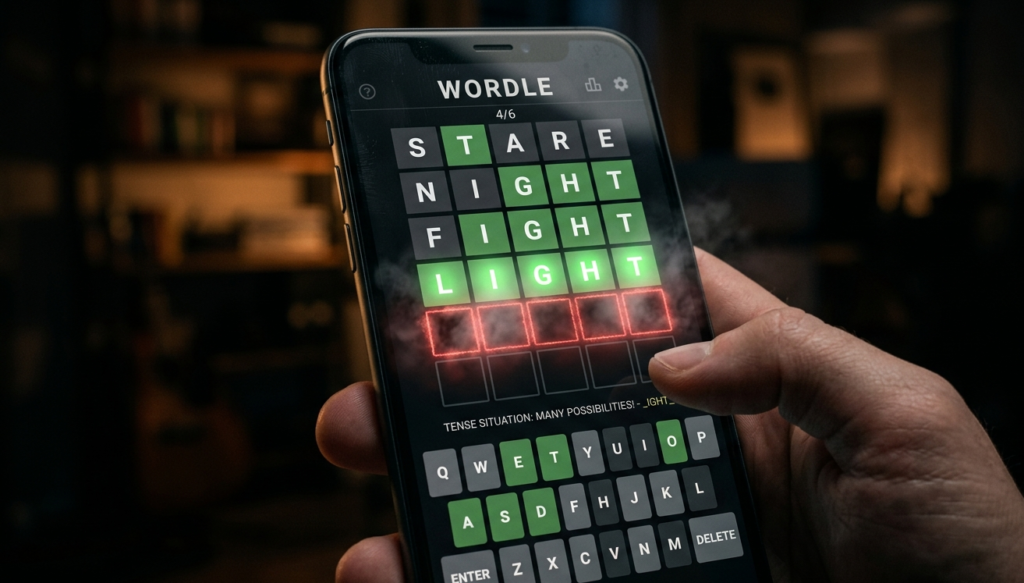
Every veteran player should follow the Rule of Four. If you reach your fourth attempt and you only have two green letters, it is statistically time to seek a hint.
Why? Because the English language is full of “Trap Words.” Think of the suffix _IGHT. If you have the last four letters, the first could be B, F, L, M, N, R, S, or T. Without a hint to narrow down the category (e.g., “It’s related to darkness”), you are playing a game of pure luck, not skill.
5. The Social Component: Why We Share
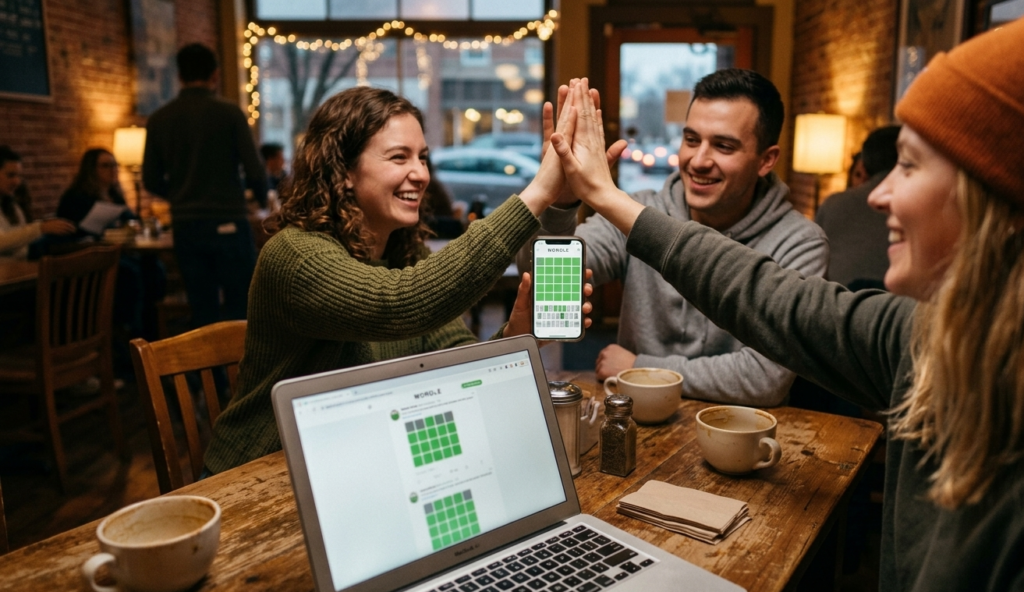
Wordle’s success isn’t just the puzzle; it’s the Emoji Grid. By providing a spoiler-free way to share results, the game created a “social ritual.”
In 2026, this has evolved into “Group Streaks.” Families and office teams now compete to see who can go the longest without losing a day. In this high-stakes social environment, “Wordle hints” act as the safety net that keeps the community together. If one person fails, the group streak dies. Thus, giving and receiving hints has become an act of digital kindness.
6. How to Write the Perfect Hint
If you are running a blog or a social media page, providing the answer is boring. Providing a human hint is an art form.
- The Part of Speech Hint: “Today’s word is an adjective often used to describe weather.”
- The Negative Hint: “There are no repeat letters today.”
- The Cultural Hint: “This word was the title of a famous 90s pop song.”
These types of hints stimulate the “solve” rather than just giving away the “result.”
7. Analysis of Recent Trends (April 2026)
Looking at the data from the last 30 days, we’ve seen a trend toward compound-sounding words and words with ‘Y’ as the only vowel (like NYMPH or LYNCH). These are the “streak-killers.”
When the word is unconventional, search volume for “Wordle Hint” spikes by over 400%. This proves that the game is getting harder—or rather, the editors are digging deeper into the “Common but Forgotten” pile of the dictionary.
8. Conclusion: The Eternal Streak
Wordle is more than a game; it’s a cognitive baseline. It’s how many of us “check-in” with our brains every morning. Whether you are a purist who refuses help or a strategist who uses every hint available, the goal is the same: the satisfaction of that final line turning green.
As we look toward the rest of 2026, the game will continue to adapt. But the core will remain: Five letters, six tries, and a whole world of possibilities.