MotoGP Spanish GP 2026 Analysis: Marc Marquez’s Masterclass Amidst Jerez Chaos
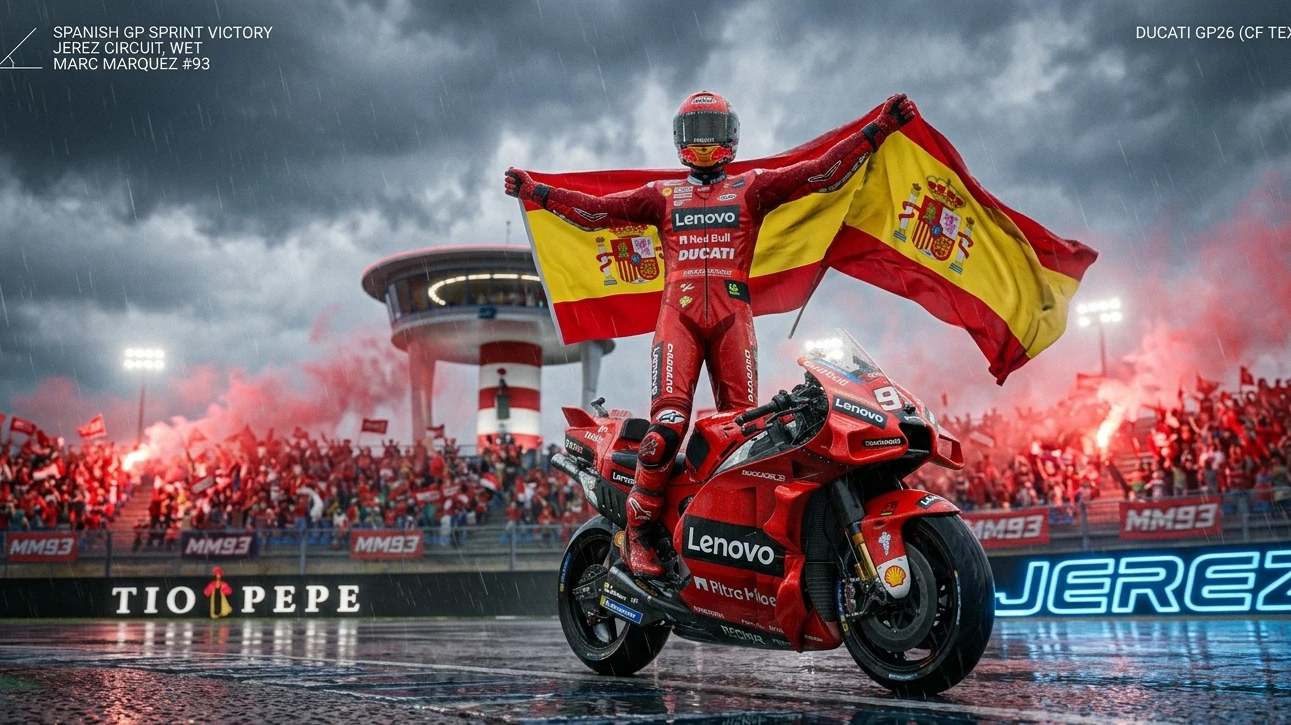
There is something about the asphalt at the Circuito de Jerez-Ángel Nieto that brings out the best—and the most chaotic—in motorcycle racing. The 2026 Spanish Grand Prix was a testament to why MotoGP remains the pinnacle of two-wheeled sport. With record-breaking crowds of over 224,000 fans packing the grandstands, the atmosphere was electric, smelling of burnt rubber, high-octane fuel, and the palpable tension of a title fight.
The Sprint Race: A Tactical Gamble
The Saturday Sprint will go down in history as the first “flag-to-flag” sprint. It began under grey, threatening skies that finally broke open mid-race.
Marc Marquez started from pole, but as the rain transformed the track into a literal skating rink, the drama spiked. Marquez actually crashed at the final corner while leading. In a move of pure veteran instinct, he didn’t just re-enter the track; he rode directly into the pits to swap to his wet-setup bike.
While others like Brad Binder and Alex Marquez suffered their own falls in the deluge, Marc’s quick thinking put him in the perfect position. He hunted down Francesco Bagnaia and a brave but struggling Fermin Aldeguer (who stayed on slicks too long) to take a three-second victory. It wasn’t just a win; it was a statement of psychological dominance.
Full Results: Spanish GP 2026 Highlights
The main race on Sunday provided a slightly more stable, yet equally intense battle for the podium.
| Rank | Rider | Team | Bike | Points |
| 1st | Marc Marquez | Ducati Lenovo Team | Desmosedici GP26 | 25 |
| 2nd | Pecco Bagnaia | Ducati Lenovo Team | Desmosedici GP26 | 20 |
| 3rd | Franco Morbidelli | VR46 Racing Team | Desmosedici GP26 | 16 |
| 4th | Brad Binder | Red Bull KTM | RC16 | 13 |
| 5th | Pedro Acosta | Red Bull KTM | RC16 | 11 |
The Return of the “Old” Morbidelli
One of the most heartwarming stories of Jerez was Franco Morbidelli. Starting from P18 on the grid, he showcased the form that once made him a World Championship runner-up. His climb through the field was surgical, proving that the VR46-backed Ducati GP26 is a formidable weapon in the right hands.
Technical Corner: The 2026 Aero and Engine War
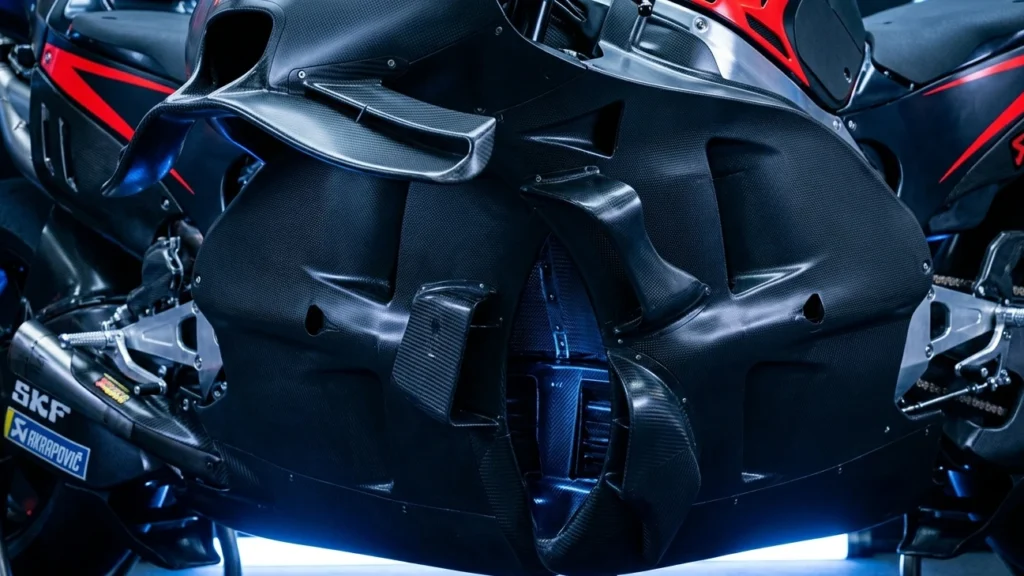
The 2026 season is a unique “bridge” year. It is the final year of the 1000cc engines before the sport transitions to 850cc in 2027. Consequently, engineers are pushing the current regulations to their absolute limit.
1. Ground Effect Fairings
At Jerez, we saw the most aggressive use of “ground effect” sidepods. Ducati and Aprilia have refined their fairings to create a vacuum effect when the bike is leaned over at 60 degrees. This allows for higher corner speeds, which was evident in the record-breaking qualifying lap of 1:28.087 set by Marquez.
2. The Ride Height Evolution
Despite the upcoming 2027 ban, ride height devices played a massive role at Jerez.
- Front Device: Now limited to race starts only (single-use).
- Rear Device: Used repeatedly coming out of the slow Turn 13 (Jorge Lorenzo corner) to maximize drive onto the start-finish straight.
3. Yamaha’s V4 Transformation
For the first time since the early 2000s, Yamaha is aggressively testing their V4 engine layout. While Fabio Quartararo struggled at Jerez (finishing 14th), the data shows that Yamaha is finally closing the “top speed gap” that has plagued them for years.
Championship Standings: The Title Fight Heats Up
After four rounds, the table is tighter than a drum. The battle between the “established kings” and the “young pretenders” is the central narrative of 2026.
| Pos | Rider | Manufacturer | Points |
| 1 | Marco Bezzecchi | Aprilia | 81 |
| 2 | Jorge Martin | Aprilia | 77 |
| 3 | Pedro Acosta | KTM | 60 |
| 4 | Marc Marquez | Ducati | 57 |
| 5 | Pecco Bagnaia | Ducati | 54 |
Marco Bezzecchi holds the lead, but his crash in the Jerez Sprint has allowed Martin and Marquez to close in. The consistency of Pedro Acosta is also a major talking point; the young Spaniard is the only rider to score points in every single session so far.
Expert Analysis: The Human Factor
Why did Marc Marquez win when he actually crashed? It comes down to mental mapping. In modern MotoGP, riders are so focused on the electronics that they sometimes forget to “feel” the track.
Marquez, however, treats the bike like an extension of his own body. When he felt the front tuck, he didn’t panic. He used his knee to prop the bike back up just enough to slide into the gravel safely, kept the engine running, and made the split-second decision to pit. That level of awareness is what separates a 8-time World Champion from the rest of the grid.
The “Acosta” Effect
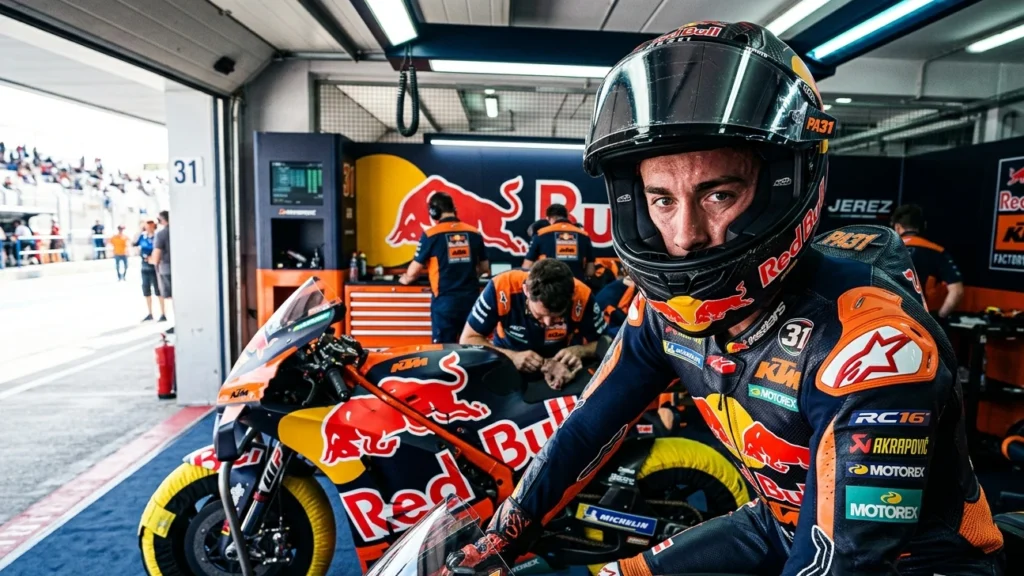
We must mention Pedro Acosta. At only 21 years old, he is riding the KTM RC16 with a level of aggression that reminds many of a young Casey Stoner. His battle with Brad Binder for “KTM Supremacy” is one of the most entertaining sub-plots of the season. At Jerez, he was the fastest man on track during the final five laps, suggesting that his first win of 2026 is just around the corner.
Conclusion: Looking Ahead to Le Mans
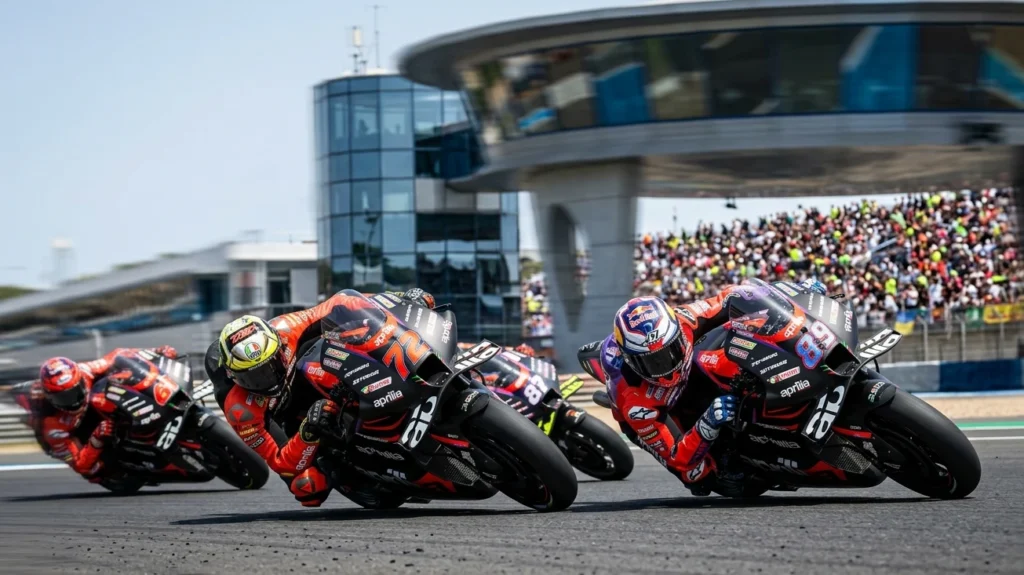
Jerez gave us everything: rain, crashes, historical comebacks, and a crowd that never stopped roaring. As the circus moves to Le Mans for the French Grand Prix, the momentum is firmly with the Ducati factory. However, with the Aprilia duo of Bezzecchi and Martin leading the championship, the Italian manufacturer from Noale is proving they are no longer underdogs.
The 2026 season is shaping up to be a classic “changing of the guard” year. Whether it’s the legendary Marquez reclaiming his throne or a new star like Acosta taking it away, one thing is certain: MotoGP has never been more competitive.