London Marathon 2026 Results: Sabastian Sawe Makes History with Sub-2 Hour Record
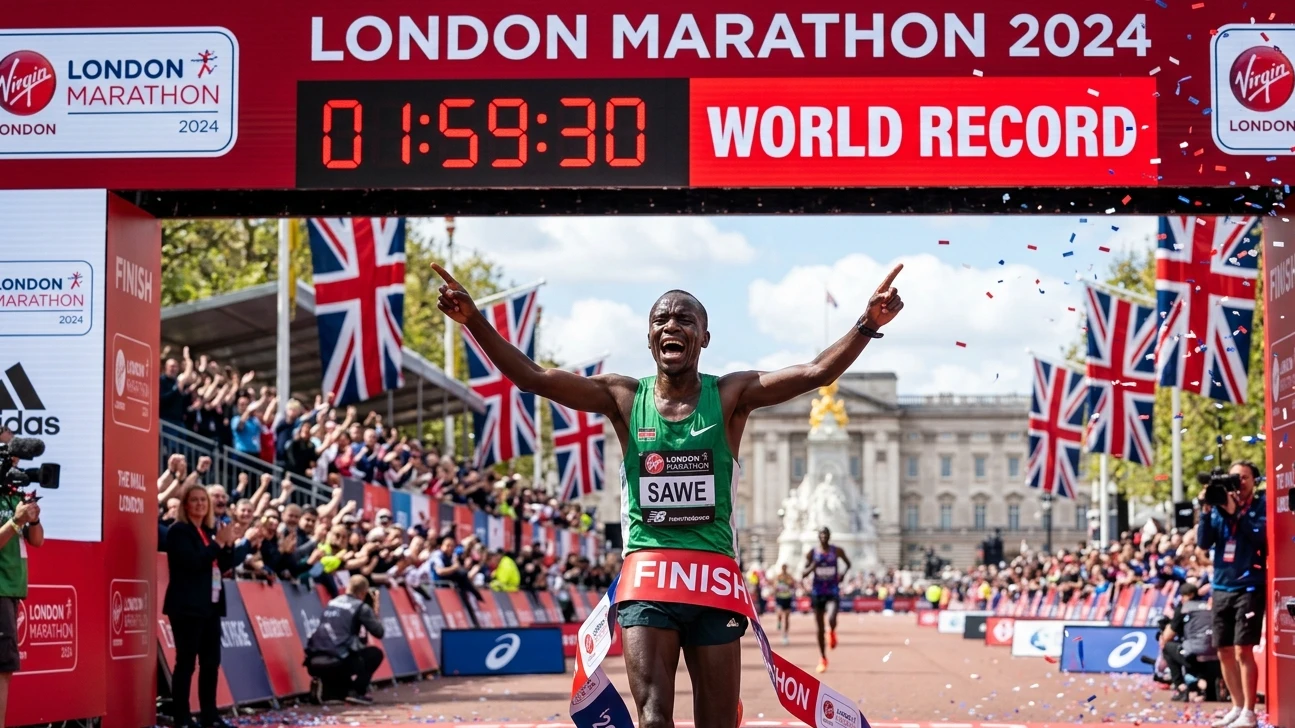
The 2026 TCS London Marathon will be remembered as the day the “impossible” became an official reality. On Sunday, April 26, the streets of London witnessed a seismic shift in human history as Kenya’s Sabastian Sawe shattered the world record, becoming the first person to run a sub-two-hour marathon in an official, competitive race.
Here is a deep-dive analysis of the results, the records, and the electric atmosphere that defined this historic day.
1. The “Sub-Two” Miracle: Sabastian Sawe’s 1:59:30
For years, the sub-two-hour marathon was considered the “Everest” of athletics. While Eliud Kipchoge famously achieved 1:59:40 in Vienna in 2019, that mark was not an official world record because it was a closed-circuit event with rotating pacers.
Today, Sabastian Sawe changed everything. Clocking an incredible 1:59:30, Sawe obliterated the previous world record set by the late Kelvin Kiptum (2:00:35).
The Strategy of the Century
Sawe didn’t just run against the clock; he survived a brutal battle of attrition.
- The Early Pace: The elite men’s group crossed the 10K mark at 28:35, signaling from the start that history was being chased.
- The Breakdown: By the halfway point, the lead pack had thinned to just Sawe, Ethiopia’s Yomif Kejelcha, and Uganda’s Jacob Kiplimo.
- The Final Surge: In the final 5K, Sawe found a gear previously unknown to human physiology. His split times in the closing miles were faster than most elite sprinters’ training paces, allowing him to cross the finish line on The Mall as a legend.
2. Elite Men’s Results: A Field of Giants
It wasn’t just Sawe who redefined speed. The 2026 London Marathon featured perhaps the fastest collective field in the history of the sport.
| Rank | Runner | Country | Time | Note |
| 1st | Sabastian Sawe | Kenya | 1:59:30 | World Record / Course Record |
| 2nd | Yomif Kejelcha | Ethiopia | 1:59:41 | Also broke the sub-2 barrier |
| 3rd | Jacob Kiplimo | Uganda | 2:00:28 | Under the previous WR |
| 4th | Benson Kipruto | Kenya | 2:01:39 | |
| 5th | Sisay Lemma | Ethiopia | 2:02:59 |
In an unbelievable twist, Yomif Kejelcha also broke the two-hour barrier, finishing just 11 seconds behind Sawe. To have two men run sub-two hours in the same race is a feat that has left the global sporting community in awe.
3. Elite Women’s Race: Tigst Assefa Retains Her Throne
While the men were chasing history, the women’s race provided a masterclass in tactical dominance. Ethiopia’s Tigst Assefa successfully defended her title, crossing the line in 2:15:41.
Assefa’s performance was a “women-only” world record (races without male pacers), further cementing her status as the queen of the distance. She held off a fierce challenge from Hellen Obiri, who finished second, and Joyciline Jepkosgei, who rounded out the podium. Assefa’s ability to kick in the final two miles after a grueling pace showed why she is currently unbeatable in the World Marathon Majors circuit.
4. Wheelchair Races: Dominance and Sprint Finishes
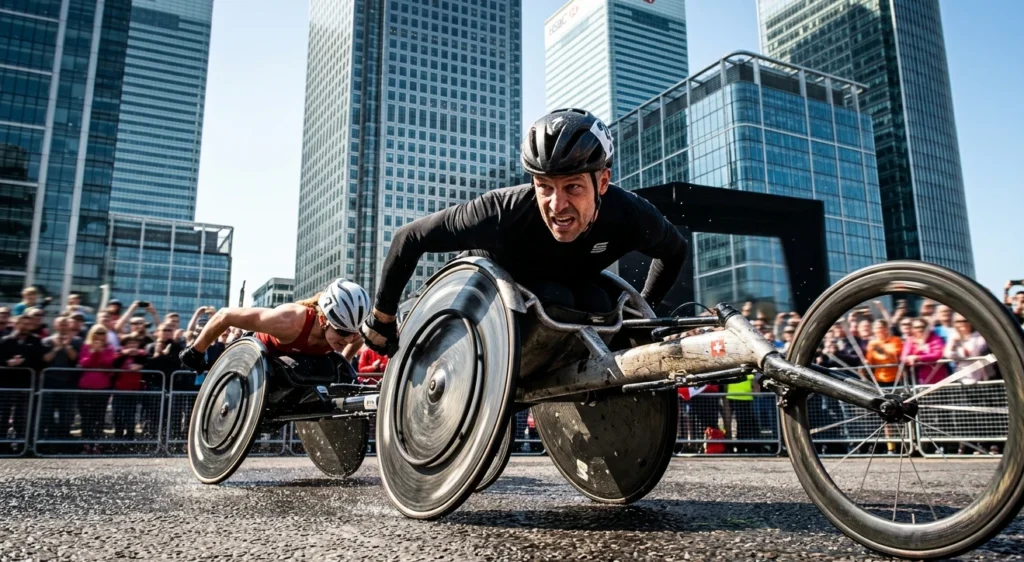
The wheelchair events were equally thrilling, featuring familiar legends and nail-biting finishes.
- Men’s Race: The “Silver Bullet,” Marcel Hug, claimed yet another London title. He broke away early, finishing in 1:24:13, nearly four minutes ahead of his closest competitor.
- Women’s Race: This was the highlight of the morning. In a frantic sprint finish, Switzerland’s Catherine Debrunner narrowly beat Tatyana McFadden by just four seconds, claiming her fourth London title with a time of 1:38:29.
5. Live News Analysis: Why This Happened Today
Several factors aligned to make the 2026 London Marathon the fastest race in history:
Ideal Weather Conditions
London provided the “Goldilocks” scenario for runners. A cool start at 44°F (around 7°C) kept core temperatures down, while the light winds (6 mph) acted as a gentle tailwind during the crucial final miles from mile 21 to 26.
Advanced Shoe Technology
We cannot ignore the “Super Shoe” evolution. Both Sawe and Kejelcha were wearing the latest iterations of carbon-plated foam technology, which has significantly increased energy return. This race will likely spark new debates about where human ability ends and technology begins.
The “Woodland Way” Addition
A new feature of the 2026 route, “Woodland Way,” added an immersive stretch of nature sounds and greenery. While designed for the 50,000+ mass participants, elite runners noted that the psychological boost of the crowd energy near the iconic landmarks like Big Ben and Canary Wharf was “electric” this year.
6. The Human Element: 50,000 Stories
Beyond the elite records, the 2026 London Marathon saw a record-breaking number of finishers. From runners dressed as giant badgers to the “Back of the Pack” heroes, the spirit of the London community was on full display.
London Marathon 2026: The Day History Was Written in London
The Great Breaking of the Barrier
April 26, 2026, will be a date etched in the history of human endurance forever. For decades, the “official” sub-two-hour marathon was considered the ultimate wall—one that might never be breached in a competitive race. Today, Sabastian Sawe didn’t just climb that wall; he tore it down.
With a mind-blowing time of 1:59:30, Sawe has officially become the fastest human to ever run 26.2 miles in a world-standard event.
Elite Men’s Race: A Tactical Masterpiece
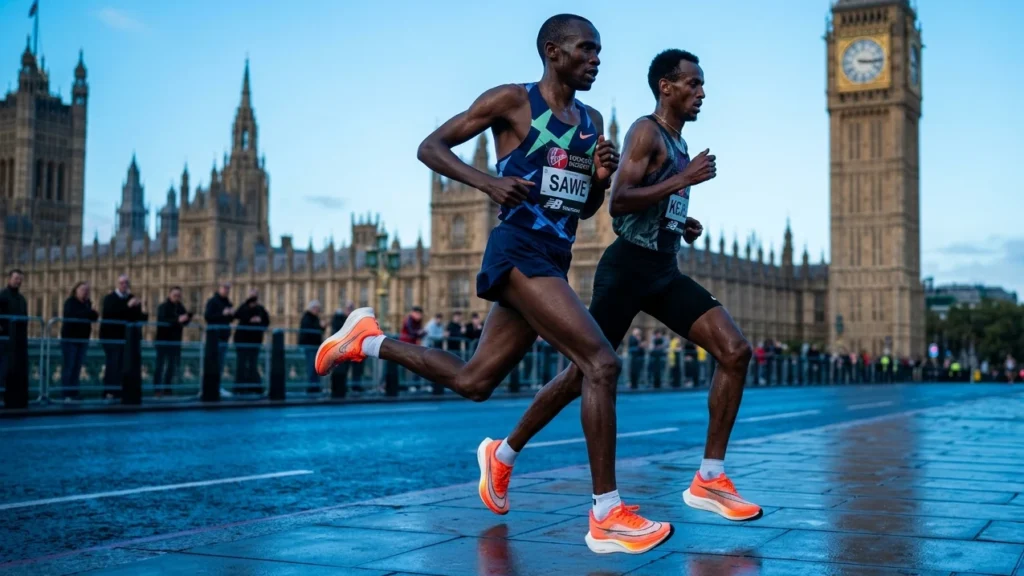
The men’s race started with a clear intent: speed. The lead pack, guided by elite pacers, crossed the halfway mark in a time that suggested something special was happening.
- Sabastian Sawe (Kenya): 1:59:30 (New World Record)
- Yomif Kejelcha (Ethiopia): 1:59:41
- Jacob Kiplimo (Uganda): 2:00:28
The battle between Sawe and Kejelcha in the final 5km was pure theater. Kejelcha, making a massive push near the Embankment, almost looked like he might take it, but Sawe’s final kick on The Mall was undeniable.
Elite Women’s Race: Assefa’s Continued Dominance
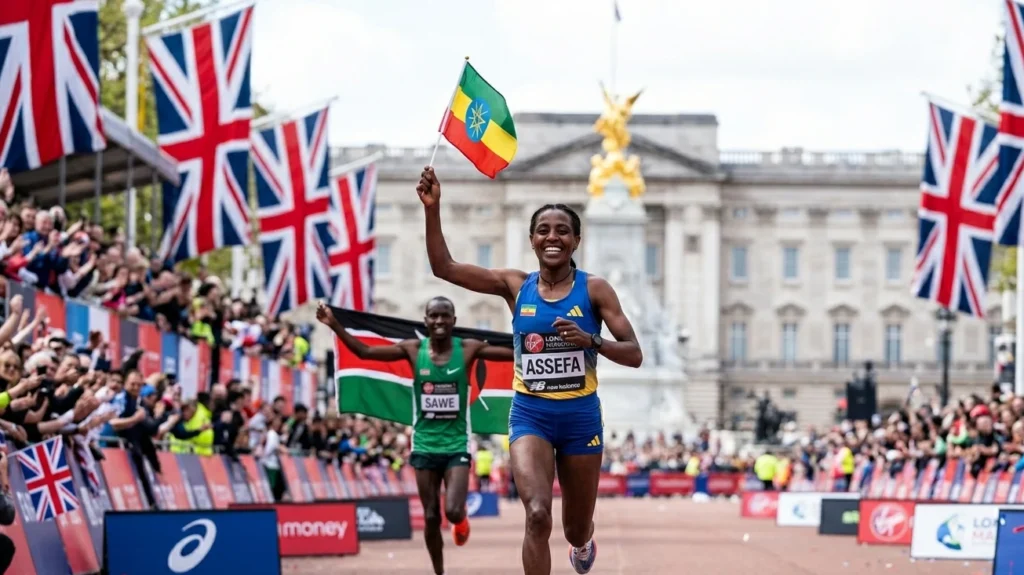
In the women’s elite field, Tigst Assefa proved why she is currently the most feared marathoner on the planet. Running a “women-only” world record pace, she successfully defended her London title with a clocking of 2:15:41.
The race was tight until the 35km mark, where Assefa pulled away from Hellen Obiri and Joyciline Jepkosgei. Her ability to maintain a metronomic pace under pressure is a lesson for every aspiring long-distance runner.
Wheelchair Excellence: Hug and Debrunner
The wheelchair athletes once again set the tone for the morning.
- Marcel Hug (Switzerland): Won his eighth London title with a dominant performance, finishing in 1:24:13. He remains the undisputed king of the road.
- Catherine Debrunner (Switzerland): In a frantic sprint finish that had the crowds screaming, Debrunner held off Tatyana McFadden to win in 1:38:29.
Analysis: Why 2026 Was the “Fastest Ever”
Beyond the athletes, three factors contributed to these insane results:
- The Weather: A perfect 7°C (44°F) start with almost zero humidity allowed the elites to push their aerobic limits without overheating.
- Next-Gen Tech: The latest carbon-fiber plated shoes are providing better energy return than ever, clearly visible in the final sprint speeds.
- Crowd Synergy: With over 59,000 participants and millions lining the streets, the energy in London today was described by runners as “a wall of sound” that carried them through the tough 20-mile mark.
The Charity Impact
While the elites took the trophies, the 50,000+ mass participants took the heart of the city. Early estimates suggest that the 2026 TCS London Marathon has raised over £100 million for various charities, breaking previous fundraising records.
From the man running in a full-body T-Rex costume to the thousands running in memory of loved ones, the human spirit was the true winner today.
Final Summary Table
| Category | Winner | Nationality | Time |
| Elite Men | Sabastian Sawe | Kenya | 1:59:30 (WR) |
| Elite Women | Tigst Assefa | Ethiopia | 2:15:41 |
| Men’s Wheelchair | Marcel Hug | Switzerland | 1:24:13 |
| Women’s Wheelchair | Catherine Debrunner | Switzerland | 1:38:29 |
Final Verdict
The 2026 London Marathon has fundamentally changed athletics. The “Sub-2” barrier is no longer a myth. As we look toward the 2028 Olympics, the question is no longer “Can it be done?” but “How much faster can we go?”
London 2026 didn’t just break records; it broke our understanding of human potential.